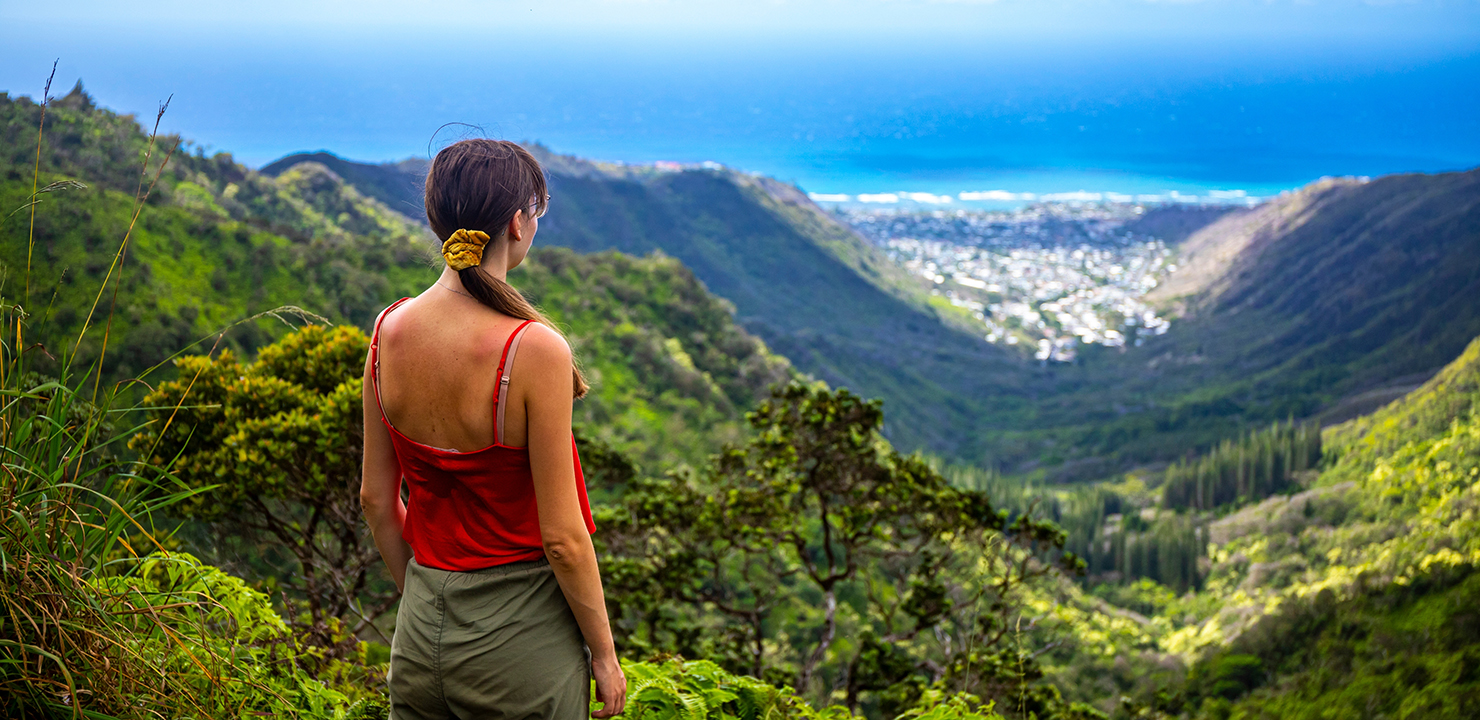
Study Away in the United States
Where Island Time and Academic Discovery Meet
Drawn to ocean views, warm weather, and a strong sense of place? Oʻahu offers an unmatched blend of natural beauty, cultural depth, and academic opportunity.
Beyond its scenery, Oʻahu is deeply rooted in Hawaiian history, values, and environmental connection. Studying here offers the opportunity to engage with Indigenous culture, sustainability, and multicultural perspectives while living in a place where land, community, and learning are closely connected.
Why study away in Hawaiʻi?
Education style. The University of Hawaiʻi at Mānoa is highly research-focused, particularly in the sciences, with academic rigor balanced by a more relaxed, island environment. Hawaiian culture and history are integrated into the curriculum, alongside strong multicultural and environmental perspectives that reflect the local context and community.
Cultural orientation. Life on Oʻahu is laid-back, welcoming, and deeply shaped by Hawaiian culture. Strong ties to history, tradition, and modern island life blend Indigenous values with contemporary and global influences. From Honolulu’s bustling cityscape to tranquil coasts, the lifestyle fosters balance and connection—a unique cultural experience within the U.S. Compared to other study abroad locations, U.S. citizens do not need visas to study here.
Student lifestyle. Student life is relaxed and community-oriented, with a strong emphasis on outdoor activities and cultural engagement. Beaches, hikes, and local events are part of everyday life, and it’s easy to connect with others who are eager to explore the island.
Hawaiian cities where study away students live:
- Honolulu is the largest city on Oʻahu and the capital of the state of Hawaiʻi. As a major urban center, it offers museums, restaurants, cultural institutions, and historic landmarks, against a backdrop of beaches and tropical scenery that make it easy to forget you’re in a city.
Hawaiian cities popular among study away students to visit:
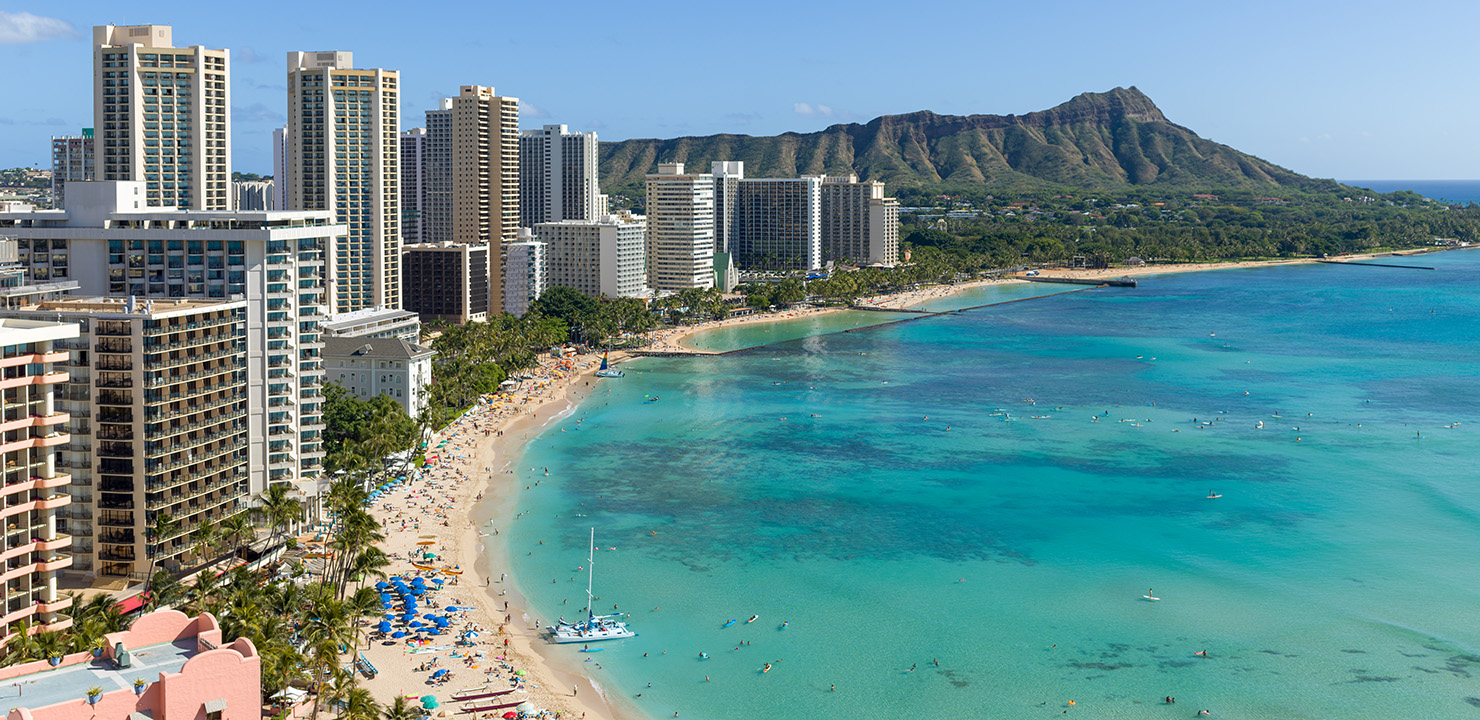
- Waikīkī, is one of the island’s most well-known neighborhoods and a central hub for tourism. It features a wide range of restaurants, shops, and hotels, as well as some of Oʻahu’s most iconic beaches. Ideal for surfing and beach days, Waikīkī means “spouting waters,” reflecting its history as a wetland area before modern development.
- North Shore is known for its natural beauty and world-famous surf breaks, attracting professional and amateur surfers from around the world. During the calmer summer months, its beaches are ideal for swimming and snorkeling, offering a quieter contrast to the island’s urban areas.
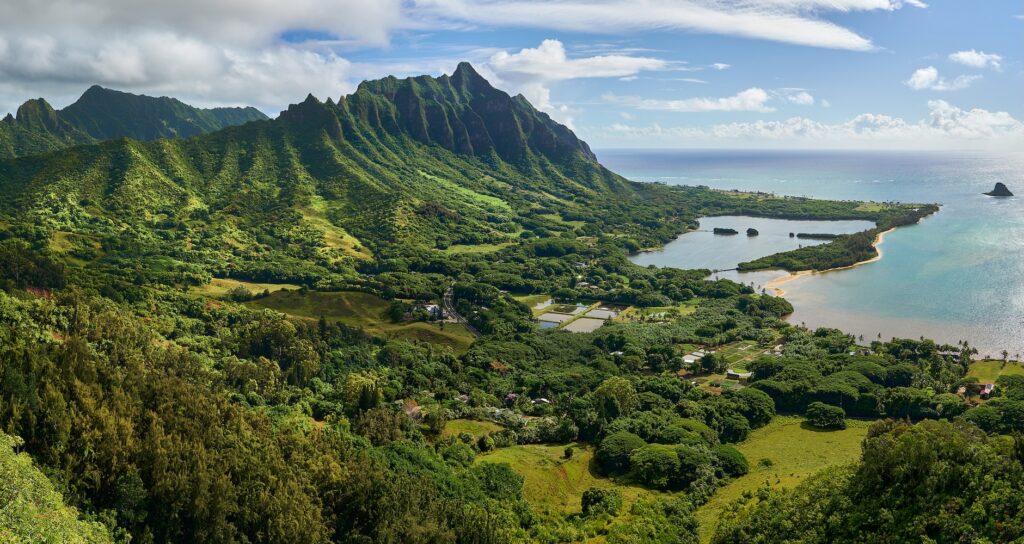
- Waimānalo is a rural community nestled against the Koʻolau Mountains. Known for its laid-back atmosphere, strong sense of local identity, and stunning coastal views, it offers a slower pace of island life with deep cultural roots.
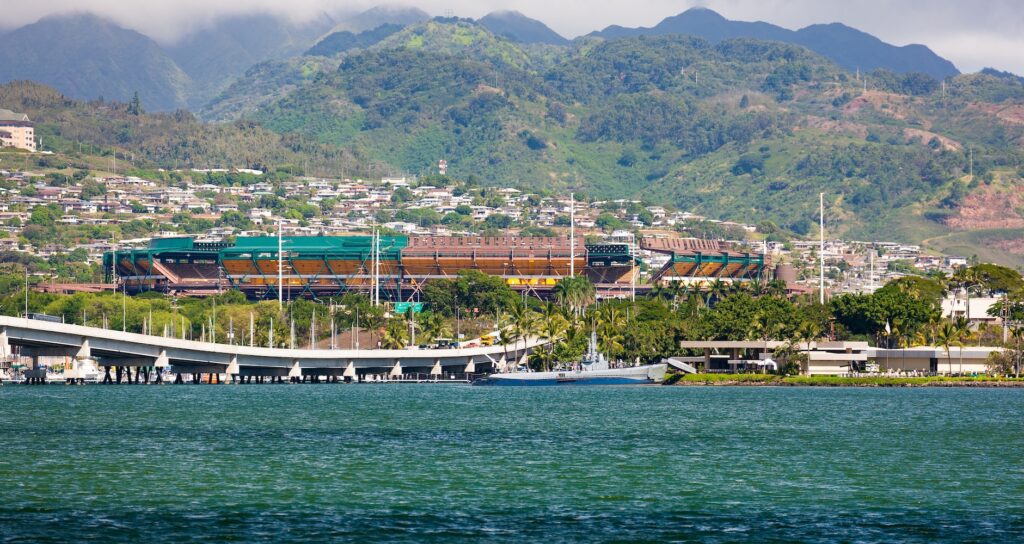
- Pearl City is a suburban area located near Pearl Harbor. The city’s name comes from the pearl oysters that were once abundant in the harbor, and today it serves as a residential community with convenient access to both historical landmarks and urban amenities.
Hawaiʻi, United States study away highlights
| Language spoken | English and Hawaiian |
| Capitals | Honolulu |
| Common housing types | Dormitory |
| Known for | Picturesque beaches, sunshine, stunning scenery, surfing, volcanoes, marine life, Hawaiian cuisine, island-time mentality |
| Time zone | Hawai’i-Aleutian Standard Time (GMT-10) |
| Currency | United States Dollar (USD) |
| Fun facts | O’ahu is home to the Dole Plantation and historic Pearl Harbor. It is also where the steel guitar originated as well as the shaka or “hang loose” sign. |
IFSA programs in Hawaiʻi
IFSA offers programs designed to align with your goals.
- By program type
- Spanish language
- Humanities and social sciences
- Cultural studies
- By term
- Full Academic Year
- Fall semester
- Spring semester
- Summer
Frequently asked questions
- Do I need a visa?
- Yes, most semester and year-long students need a visa. Visit our Visa Requirements page for guidance.
- Are there scholarships?
- Yes! IFSA offers a range of scholarships, including need-based awards and destination-specific funding. View scholarships.
- What excursions and activities are typically* offered?
- Makapu’u Point Lighthouse Trail
- Waikīkī Beach and walking tour
- Ala Moana Beach Park
- Hanauma Bay Nature Preserve
- Diamond Head Crater hike
- Mānoa Falls hike
*Excursions vary by term, year, and location
- What sports are popular in Hawaiʻi?
- Surfing. As the birthplace of modern surfing, Hawaiʻi is one of the best places in the world to learn or improve your skills. Popular surf areas include the North Shore and Waikīkī.
- Beach volleyball. Widely played year-round, beach volleyball is deeply embedded in island recreation and culture, with strong community participation across Oʻahu.
- Basketball. Like the mainland United States, basketball is a popular recreational sport, commonly played at parks, beaches, and campus facilities.