Prague, Czech Republic
IFSA Prague Quarter Program: Computer Science
Program Overview
TAKE THE CLASSES YOU NEED IN A POSTCARD-PERFECT EUROPEAN CITY
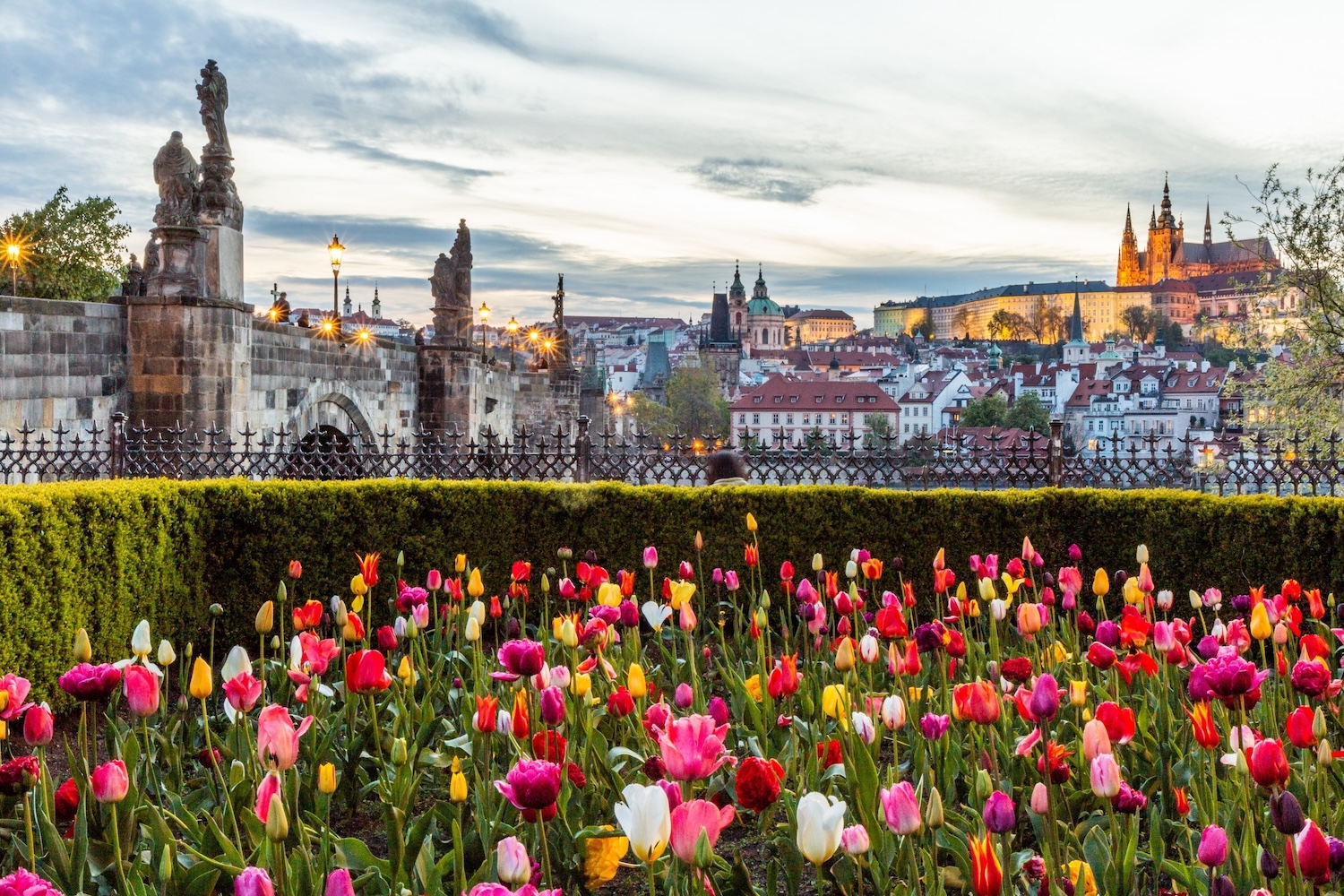
Prague’s relatively affordable prices are as alluring as its awe-inspiring architecture. In this magical city, join peers that share your interest in computer science for study abroad that’s aligned to your school’s quarter-system calendar and credit requirements.
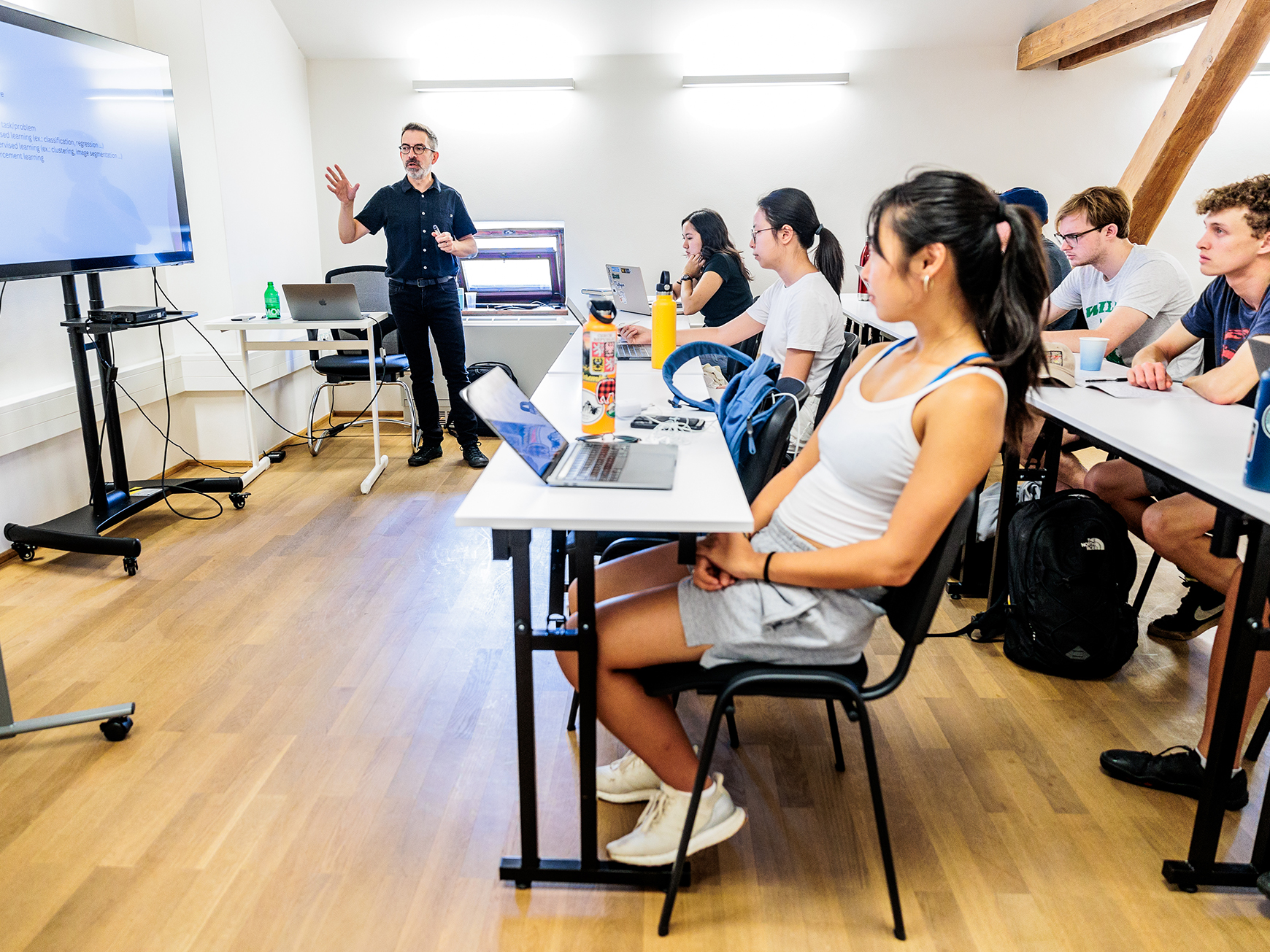
Stay on track for graduation as you expand your knowledge with IFSA classes on topics like AI, database management, machine learning, and software engineering, plus choose from additional electives.
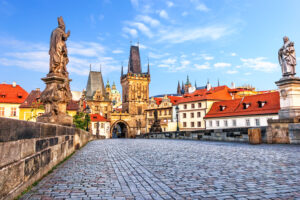
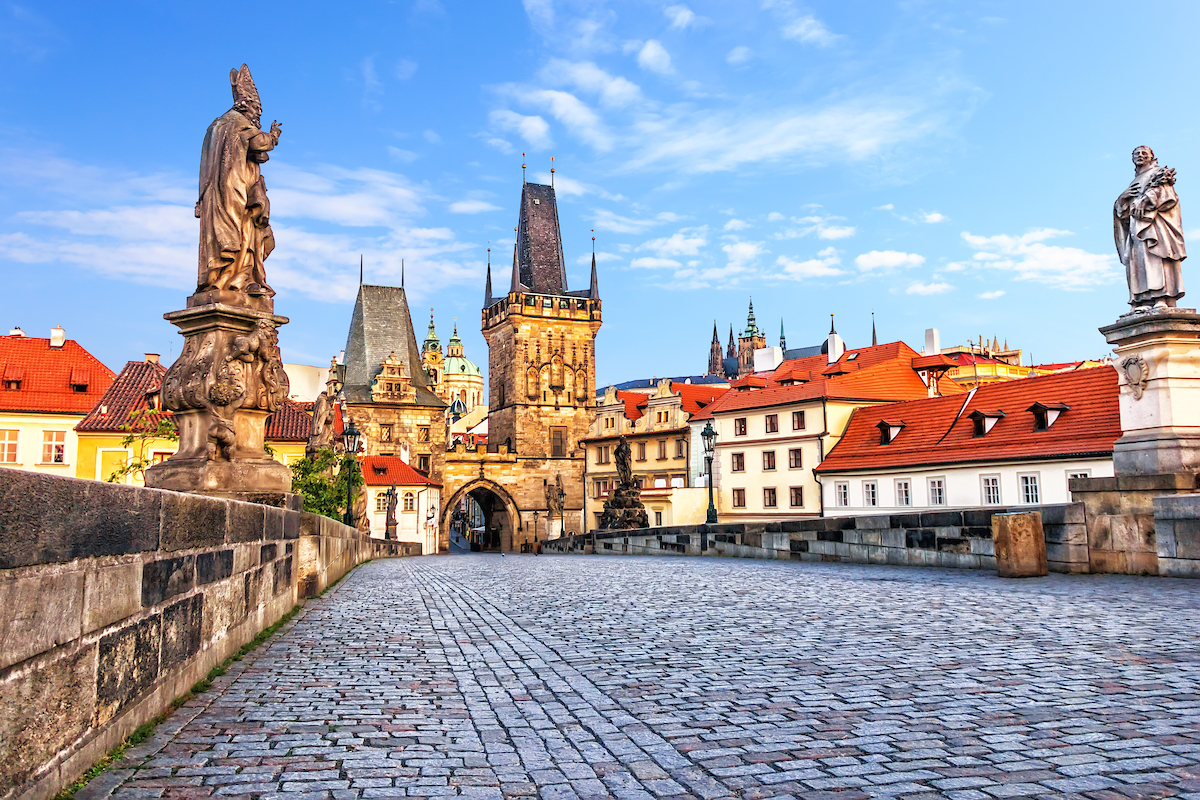
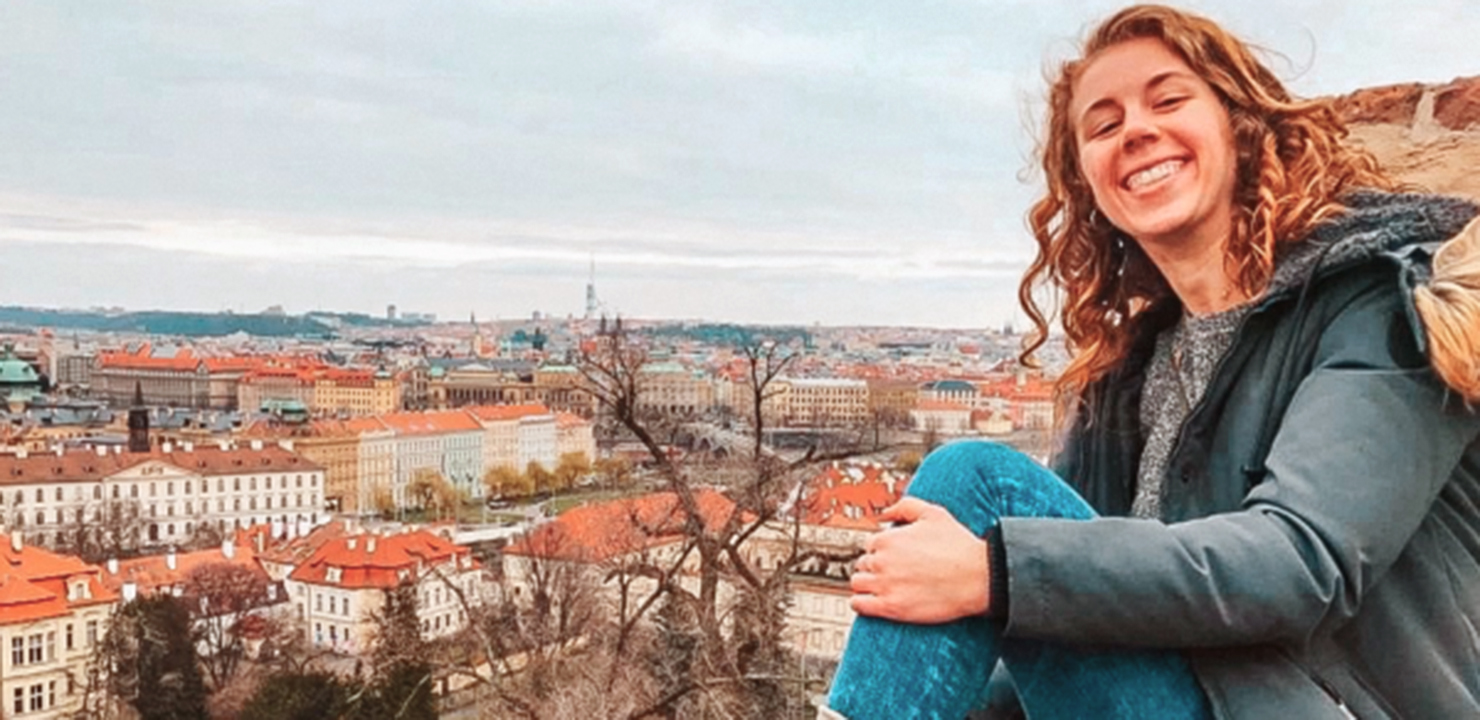
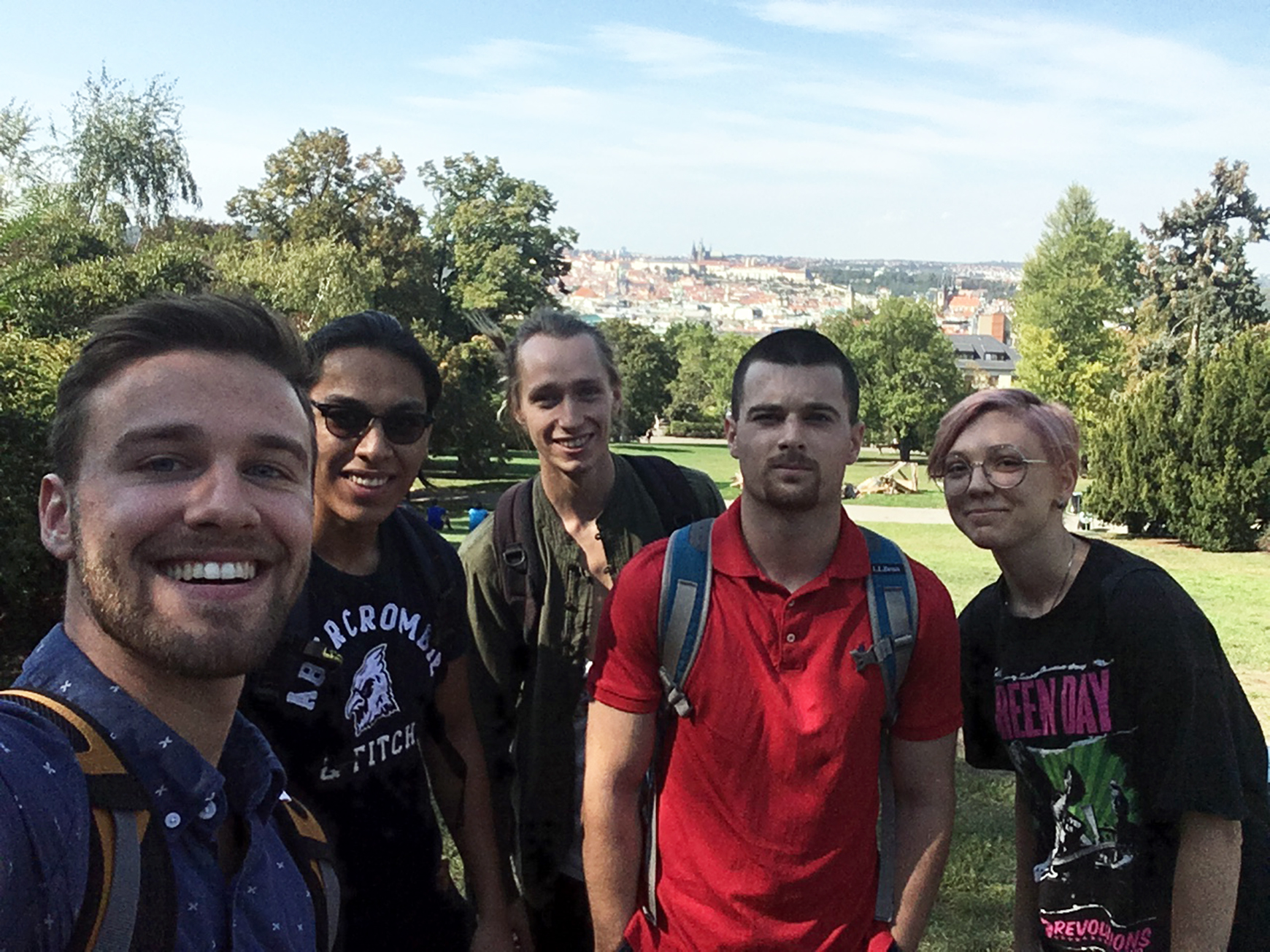
Studying at the historic Villa Grébovka in the heart of the city makes it easy to get to know this distinctive city. After class, head to a café with friends to savor chlebíčky—open-faced sandwiches—or explore the city’s many wonders, including quaint Old Town, the 11th century castle, Vyšehrad, and David Černý’s street art.
We’ll help you make authentic connections with Czech people via peer meetups, meals, activities, and curated excursions, internships, and more—all included in your program fee.
Visit our Scholarships, Grants, and Financial Aid page to learn about IFSA Quarter Program Grants, IFSA First-Generation Scholarships, and more.
Details at a Glance
Application deadline
Minimum GPA
2.00
Credit load
13.5–18 quarter credits
Housing
Apartment/Flat, Single Room Option
Instruction language
English
Language prerequisites
None
Visa required?
Not in most cases. Learn More.

Academics
Students enroll in three or four classes per quarter. Not all classes may be offered in a given term, depending on enrollment.
Algorithms
This class provides an introduction to the modern study of computer algorithms. It presents many algorithms and covers them in considerable depth through mathematical rigor and engineering issues. Through a presentation of algorithms in English and pseudocode, design techniques, and application areas this class will emphasize efficiency as a design criterion, we include careful analyses of the running times of all our algorithms. (4.5 U.S. quarter credit hours)
Architecture and Design in Prague
The class introduces the European artistic architecture and design of the Czech capital. By examining artists, architects, and their works, students acquire a deeper understanding of the city’s character and how patronage, power, and politics have shaped the urban landscape. The class covers the periods of European architectural development from medieval to modern, distinguishing the various artistic styles and movements; the ways in which architects and designers conform to, or disrupt, artistic conventions; and how their work reflects and even influences the social and political dynamics of the city. (4.5 U.S. quarter credit hours)
Computer Architecture and Assembly Language
This course introduces the functional organization and operation of digital computers through the lens of both foundational theory and international context. Students will explore assembly language programming, including addressing modes, stack operations, argument passing, arithmetic operations, decision-making, macros, modularization, linkers, and debuggers. Emphasis is placed on understanding how low-level programming interacts with computer architecture. (4 U.S. quarter credit hours)
Czech History and Culture: Echoes of 20th Century
This class will explore the rich and multifaceted history of the Czech Republic in the context of Europe, examining the cultural and social factors that have shaped the nation’s unique identity throughout the 20th century. Throughout the class, we will visit various locations connected to key moments of the recent past and study how historical developments affected Czech society as we know it today. By analyzing numerous textual and visual resources, such as public memorials on the streets of Prague, students will gain a deeper understanding of the dynamic interplay between politics and culture and how the country addresses the achievements and traumas of its recent past. The class will also provide students with analytical frameworks to reflect critically on complex social phenomena, both past and present, at local and global levels. (4.5 U.S. quarter credit hours)
Data Structures
This course introduces students to the design, implementation, and analysis of fundamental data structures. Topics include abstract data types, dynamic arrays, linked lists, trees, graphs, binary search trees, hash tables, storage management, and complexity analysis. Students will develop reusable data structures and analyze their performance in terms of time and space complexity. The course emphasizes practical programming skills and algorithmic thinking, preparing students for advanced computer science coursework and real-world software development. (4 U.S. quarter credit hours)
Democracies in Transition
The content of this course is interdisciplinary, touching on history and philosophy, economics and political science, business, and the social sciences. Its focus is the exploration of current issues and the changing dynamics in the European democratic process of integration, their historical roots, every-day demonstrations and potential future development in the local setting in Prague. We will explore the drivers that have shaped and continue to shape the European identity in the constant tension between individual liberties and community and societal needs by taking a holistic perspective and providing students with the foundation for an understanding of the socio-cultural complexity of Europe. Carefully selected themes are illustrating the historical and cultural developments of democracy in the European continent and the establishment of the most important political institutions playing a role in facing the future challenges. Through exploration of contemporary issues, the course will highlight the historical, socio-cultural and political context of Prague as a European city, enabling students to engage their creative thinking and problem-solving skills from a position of knowledge and awareness. (4.5 U.S. quarter credit hours)
Intercultural Communication
This course invites students to critically explore intercultural communication through direct engagement with diverse cultural environments. Students explore how culture-general concepts, power dynamics, and societal structures shape communication across borders. Emphasis is placed on developing self-awareness and other-awareness, particularly in relation to cultural group memberships and personal identities. Through immersive learning and reflective practices, students cultivate respect for varied communication styles and cultural perspectives, gaining the skills to interact thoughtfully and effectively across cultural boundaries. The course also highlights the resilience and contributions of marginalized communities, encouraging students to recognize and honor the richness of global diversity in both everyday interactions and broader societal contexts. (4.5 U.S. quarter credit hours)
Introduction to Artificial Intelligence
The class will introduce the basics concepts which have developed in the area of Artificial Intelligence (AI). Since the 1960’s, AI has been applied to complex programs which could achieve tasks considered very complicated even for humans (such as optimization problems or face recognition). Today, AI has developed into a fully-fledged field which is connected with big data, data analytics, and machine learning. The class will introduce the key concepts of intelligent agents, their behavior and environment, and their role in problem solving, and knowledge and reasoning representation. Modeling intelligent behavior of the agents designed to solve problems is a challenging task, and several models have been developed (logical, probabilistic, and/or based on neural networks). The class will survey basic methods, looking for common points and differences. In particular, the modeling of learning (a characteristic trait of humans) will be discussed with examples from natural language processing, and will be put in the context of machine learning (ML). (6 U.S. quarter credit hours)
Introduction to Computer Network Security
The goal of this class is to provide the students with a solid foundation for securing data in a computer infrastructure, covering thus data security on the end devices (computers) as well as securing data in transit (network devices) and on remote storage (data centers and/or cloud). To complement this, it also presents user authentication and accountability (logging). The aim of the class is to present students with the enforcement of CIA (Confidentiality, Integrity, and Authentication) and AAA (Authentication, Authorization, and Accounting) concepts/services on a data infrastructure that is both secured and scalable. Building on necessary definitions, the class introduces key security concepts and principles, and continues to enforce such concepts and principles on the data path from the end-user, at each device, towards the internet. The content is presented in a constructive manner, starting with the most important definitions, security concepts and principles and continuing to the enforcement of these concepts and principles on the data path from the end-user, at each device, towards the internet. From an entity perspective, the class covers the end user, workstations and servers, switches, routers, firewalls, data storage, and cloud services. (6 U.S. quarter credit hours)
Introduction to Machine Learning
In this class, students develop an understanding of the theoretical foundations in machine learning (ML) and an ability to use its methods in practice. Several state-of-the-art models and algorithms will be discussed, including regression, clustering, decision trees and neural networks, and deep learning. Concurrently, students develop a solution for a test problem using tools discussed in the class, such as git, python, etc. This practical experience assesses the effectiveness of the chosen ML algorithms and provides an understanding of the key role of data selection and the evaluation of results. (4.5 U.S. quarter credit hours)
Marginalized Populations in the Czech Republic
This sociology class provides a sociological analysis of marginalized populations in the Czech Republic, exploring their historical, political, and socioeconomic contexts. Students will examine the experiences of Roma communities, an estimated half-million African and other immigrants, LGBTQIA+ individuals, and other marginalized groups, focusing on both the successes and ongoing struggles they face in Czech society. Through case studies, historical context, and contemporary political debates, the class will highlight how social exclusion, integration efforts, and government policies have shaped the lives of these groups. Students will critically assess the role of nationalism, social policy, and economic factors in shaping public attitudes and policies toward marginalized populations. This class is ideal for students interested in sociology, politics, history, and social justice with a focus on marginalized populations in Central and Eastern Europe. (4.5 U.S. quarter credit hours)
Software Engineering
This class focused on the two dimensions essential for successful software development: software engineering proper, which includes software architecture selection and other technical details, and project management, including its planning stage. Students learn how to model software processes and analyze clients’ needs to design a suitable solution, including representations via Unified Modeling Language (UML). Throughout the term, progressive exercises survey requirements for system architecture, emphasize an object-oriented approach, and analyze methods for testing and evaluation. (4.5 U.S. quarter credit hours)
Web Development
This course introduces students to the fundamentals of web development, including HTML, CSS, JavaScript, and full-stack development using the MERN stack (MongoDB, Express, React, Node.js). Through hands-on projects and guided instruction, students will learn to build interactive, scalable, and secure web applications and explore global perspectives on web architecture. (4 U.S. quarter credit hours)
Eligibility
- You must be at least 18 years of age. Students under 18 may be accepted on a case-by-case basis.
- You must be currently attending or recently graduated from a U.S. or Canadian community college, technical college, two-year college, four-year college, or four-year university.
- You must have completed at least one (1) full-time year of study at your home institution before the beginning of the term.
Transcript
Upon completion of your program, IFSA will send an official Butler University transcript to your home university with your coursework converted to the U.S. semester credit hour system. You will also have access to an unofficial transcript in your IFSA Student Portal. The transcript reflects classes taken, credits attempted, and grades earned during your term abroad. This service is included in your study abroad program at no additional cost. See our Transcripts page for more information.
Excursions
Activities and excursions are designed to pull you into the communities you visit and encourage cultural connections of every kind. There’s no extra fee to participate in these optional outings—everything is included in your program fee.
Below are a selection of activities and excursions from previous terms; options may vary for your program. Due to the seasonal nature of many of program activities, we cannot guarantee a specific activity or excursion will be available in a given term or program.
Activities
- Cultural Life in Prague: The social, intellectual, and spiritual life of Czechs is deeply intertwined with cultural events, and classical music is an art widely embraced as local. Attending a concert at one of Central Europe’s most prestigious concert halls provides a deeply personal experience and gives you an opportunity to connect with the local psyche on a special occasion.
- A Taste of Prague: Treat yourself to sweet koláče, rich svíčková, and classic goulash on our guided Food Tour. Want to take it a step further? Join our Cooking Class and learn how to make these dishes yourself. In the evenings, relax at an Open Mic or enjoy a Czech movie night with other students and our student buddies.
- Explore the real Czechia outside of Prague: Leave Prague behind and discover Bohemia and Moravia. Visit historic castles, medieval towns, and memorable nature spots. Visit a famous brewery to learn the secrets of Czech beer, and try your hand at glassmaking—a craft that has made Czechia world-renowned.
- Play and Watch Traditional Sports: Let’s watch and try some Czech sports! Cheer for your favorite team at an ice hockey or football match, or join a friendly game of badminton. Play a Trivia Game and test your knowledge of Czech culture.
- Celebrate Czech Traditions: Enjoy authentic Czech customs. Sit by a campfire with live music and soak in the atmosphere. Join a Christmas Eve workshop to taste a typical Czech Christmas dinner and experience Christmas traditions. Experience Czech Easter by painting eggs and tasting traditional treats.
Excursions
- Kutná Hora Trip: This unique location is definitely one where exploring the topic of religion in the Czech context and in your experience will generate discussion and thought, as we ponder the architecture and history of the town’s landmarks. On this day trip, we will visit the town with the famous “Bone Church” and discover why the bone church was built. Both Kutna Hora and Sedlec are UNESCO Heritage Sites.
- Czech Outdoor Culture: Where do the locals disappear to every weekend? Escaping the town and enjoying the countryside has been a local tradition that goes back to the 18th century. Join in a similar experience on a walk through the Silent Valley to a small village just outside Prague. Like locals, you will enjoy not only the nature surrounding us, but also a lunch at a local brewery house.
- Brno Trip: This weekend takes you to Brno, capital of Moravia and the second largest city in the Czech Republic, located halfway between Prague and Vienna, Austria. Visit the famous underground prison—the “Casemates”—at the Špilberk Castle. There discover the life of one of its most famous prisoners, Václav Babinský, a 19th century robber who “stole from the rich and gave to the poor.” Get a taste of the city’s well-merged local and international cuisines and cafes on stroll to the Cathedral of St. Peter and Paul, topped off with a tour of Bunker 10-Z, a Cold War bunker.
- Plzeň Trip: Visit the world-famous Pilsner Urquell Brewery where you’ll be introduced to the history of the world’s first true golden lager and its wider importance in Czech culture. Then set off on an interactive scavenger hunt through the city of Plzeň (Pilsen) and discover the deep historical ties that this capital of western Bohemia has to the United States.
Housing and Meals
Housing
Apartment/Flat, Single Room OptionMeals
Self-CateringDetails
Prague students typically live in apartments shared by four to six IFSA students in the city’s residential neighborhood. Home to Czech and international locals, this neighborhood is a short tram ride from the historic city center. Apartments vary but are generally in updated historic buildings, a 5- to 15-minute walk from the IFSA Program Center.
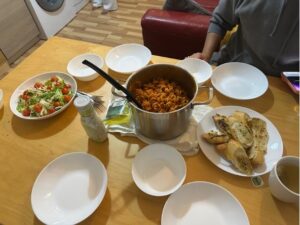
Flats could be single-gender or mixed-gender. Bedrooms are shared by same gender students. Students can request single rooms—keep in mind that private rooms include an additional fee to cover the higher cost. Students are responsible for their own meals, and often cook in their apartment kitchens, which are fully equipped.
Sample housing
Explore what your Prague home might be like:
- Location: International residential neighborhoods within walking distance of the IFSA Program Center.
- Commute: Between 5- to 15-minute walk to the IFSA Program Center at Villa Grébovka.
- Living space: Apartments for four to six students in older, historic buildings. Students share bedrooms with two single-gender students per room. Bedrooms include two beds, desks, and storage. Residents share bathroom, living space, eating area, and kitchen with oven, refrigerator, dishwasher, and basic utensils. Duvet, pillow, and fitted sheet provided; students provide top sheet and towels.
- Meals: No meal plan. Students prepare or purchase meals, and often tell us cooking together is a fun, social part of the day.
- Other details: Internet included. Washing machines and drying racks in each apartment
- Nearby: Cafes, restaurants, shops, galleries, concert venues, farmers’ markets, tram and metro. Jiřího z Poděbrad Square. Žižkov TV tower. Riegrovy Sady. Náměstí Míru Square.
Dates and Fees
Get Started

Eleni Katsarelas
Senior Enrollment Counselor