
The Financial Realities of Study Abroad in China

As a first-generation student dreaming of the chance to study abroad, the biggest concern looms large—can I afford it?
This question had me and my family stumped, as I took a considerable amount of time to list all of the financial responsibilities I would need to take on. At some point, I doubted the possibility of going abroad, enhancing my language skills, making new friends, and trying new food—all so exciting, but so distant because of the realities of a financial burden.
This became my motivation to pursue my dream of studying in China. I wanted to experience what everyone coming home from their semester abroad would boast about. I had to go through the process myself, given that my immigrant parents never had the same opportunities to participate in such an experience. Now that I have almost finished my semester abroad, I can share my experiences so you don’t have to go through this alone!
Look for scholarships and grants
First, it’s important to explore scholarships and grants. As a student at Georgetown University, I knew there were study abroad scholarships and aid opportunities for first-generation low-income students.
- Research your school website, schedule a meeting with the financial aid staff or your university’s global education/study abroad department. They’ll use information on your financial status to guide you.
- Review the IFSA Scholarship page for need-based, location-specific scholarships and grants. Examples include IFSA State School Grants, IFSA Minority Serving Institution Grants, IFSA General Scholarships, IFSA First-Generations, and Grants for HBCU Students.
Know your payment platforms
Cost in China is very different from other countries. Consider the exchange rate between the currency you plan to use with China’s. Know also, that China has a very different payment system. If you want to use a non-Chinese bank card/account, you must register your card (or cards) on Alipay and WeChat Pay before you arrive. You can make payments using these apps on your phone if the cards you wish to use are registered before you arrive in China. These payment tools are critical, especially for international students, because cash is rarely used in larger cities such as Shanghai and Beijing. (It’s good to bring cash in case of emergencies, but not for daily purchases.)
Factor in food
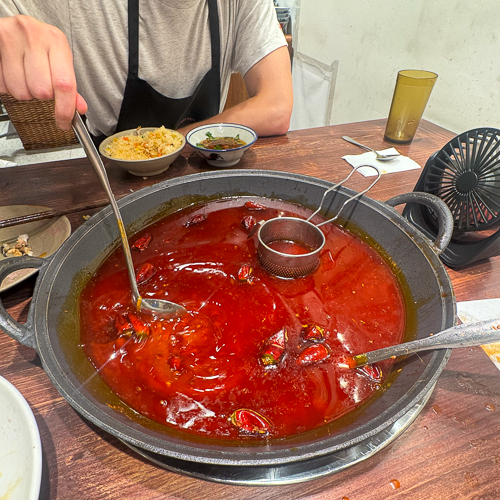
Food in Shanghai is more expensive than in many parts of China. Plus, international food options are significantly more expensive than local foods. On average, international food can range from 30 to 100 CNY (about 4 to 20 USD; still cheaper than in the U.S.), depending on where and what you purchase. Local foods, on the other hand, are less expensive than at average American food franchises (a bowl of beef noodles costs 2 to 5 USD, coffee or juice from local companies like Luckin Coffee range from 1 to 4 USD). My program does not include a meal plan, and I spend up to 10 USD a day making or purchasing meals.
Plan for transportation costs
Public transportation in China includes Alipay and WeChat bikes for rent for only a few CNY, plus public buses and the metro. China has a very efficient transportation system that is also inexpensive, at only a few cents USD.
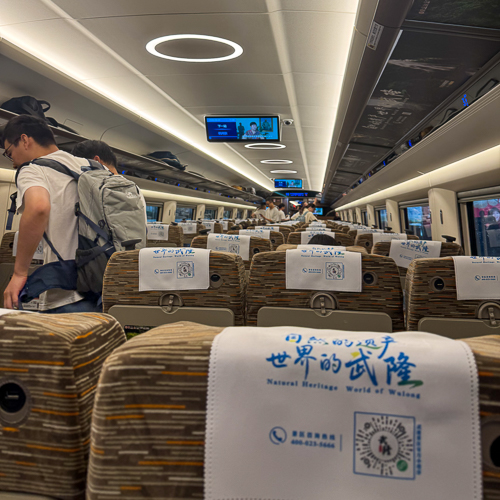
When a bike or metro doesn’t make sense, I use an app called Didi. It’s like Uber and Lyft, but the price is very different. I haven’t paid more than 25 USD for a Didi, even for 30- to 40-minute rides. High-speed rail is also great for exploring beyond Shanghai and tickets are less expensive than flights in the U.S. For an eight-day trip to visit cities such as Changsha and Chongqing, I paid roughly 400 USD (two times cheaper than my flight from home to my university in the U.S.).
In China, other purchases like takeout or shampoo are made through Taobao, Jindong, Meituan, Eleme, etc. TShipping and logistics are simple, with delivery costs not exceeding about 2 USD.
In essence, studying abroad in China can be financially feasible if you have the enthusiasm to find a way to get here. Study abroad is an enriching experience that combines all the good you take from academics, social life, and cultural immersion. Don’t let your financial situation prevent you from having the experience of a lifetime!
Ashley S. | Georgetown University | IFSA Shanghai: International Business | Fall 2025