
My Four Agreements for Studying Abroad in Edinburgh
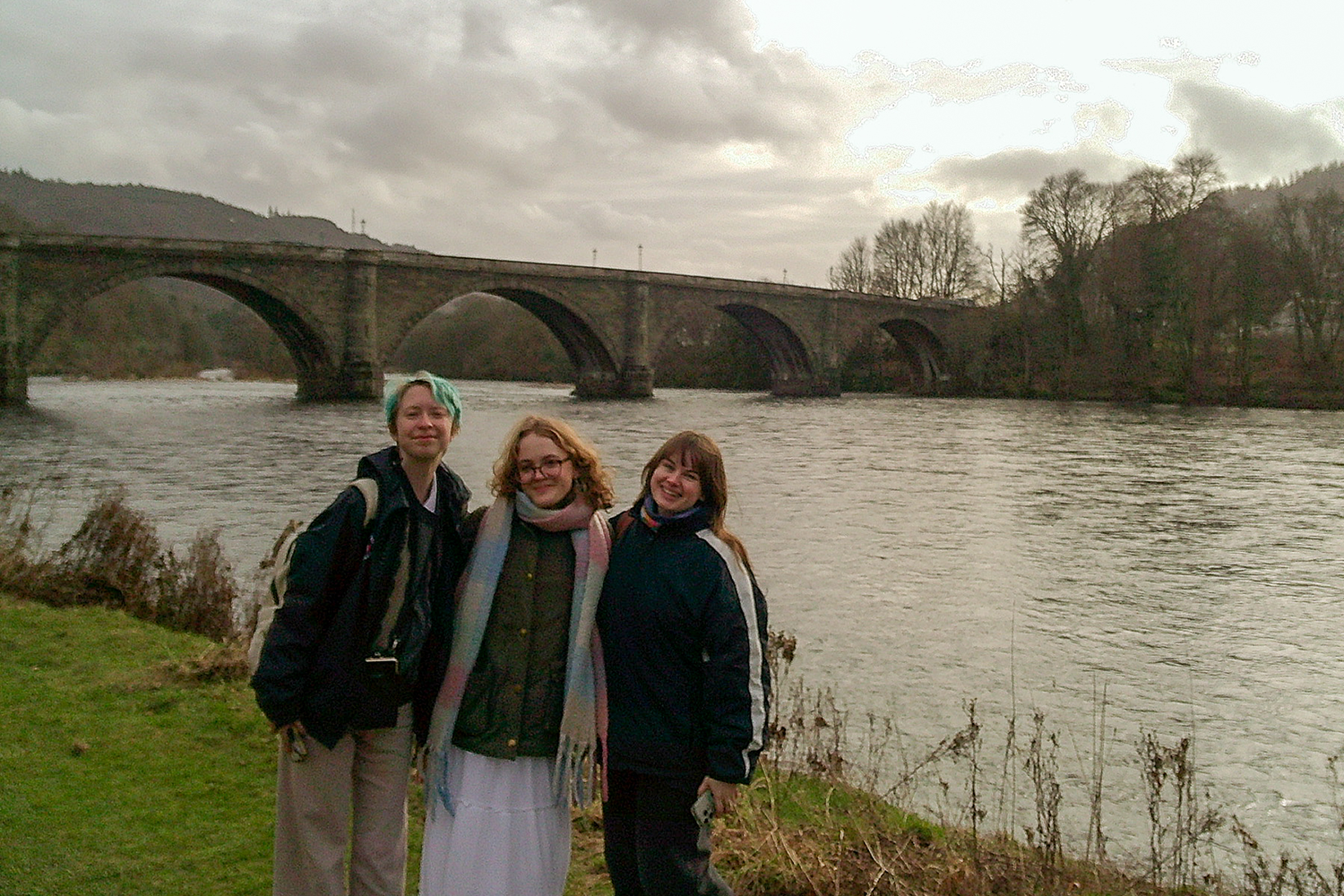
I first encountered The Four Agreements by Don Miguel Ruiz while browsing a small bookstore off the Royal Mile during my first week as a student abroad. I had just finished IFSA orientation and was still adjusting to academic life at a UK university. I felt a strange mixture of independence and uncertainty that comes with arriving in a new country. I picked up the book casually, not expecting it to shape how I experienced Edinburgh. But it did.
Here are the four agreements and how studying in Scotland has given them new meaning for me:
1. Be impeccable with your word.

The UK academic system is very different than the system I know from the United States. Lectures are large and tutorials require meaningful preparation. At first this felt intimidating. But I came to see this as an opportunity to practice this agreement.
Being impeccable with my word has meant showing up fully and saying yes often. Yes to raising my hand even when I’m unsure, yes to speaking in a room that doesn’t slow down for me, and yes to doing the reading not because it’s checked, but because the conversation depends on it.
Of course, this agreement does not just apply to academics. It’s saying yes to the spontaneous train trip to Paris with new friends. Yes to conversations that stretch late into the night. Yes to invitations that feel slightly outside my comfort zone. Yes to building a life here rather than letting these five months pass me by.
I’ve learned that being impeccable with my word is about alignment and letting yes open new experiences.
2. Don’t take anything personally.
Scottish humor is dry. Academic feedback is direct. The wind in Edinburgh is relentless.
It’s easy—especially in the first weeks abroad—to interpret unfamiliarity as rejection. A professor’s critique of an essay, confused glances at your pronunciation, or a cultural reference that flies over your head can all feel personal. But they are not.
Living abroad has taught me that most moments of discomfort are not judgments, but invitations to grow. I’ve learned not to internalize every awkward interaction and accept that these moments are part of growth and acclimation.
3. Don’t make assumptions.
This one has been the hardest but also the most transformative. Before coming to Edinburgh, I thought I knew myself fairly well. I had a clear sense of who I was academically, socially, and personally. But being here has complicated who I am and how I perceive myself.
I’ve learned that not making assumptions applies to the stories we tell about ourselves. I assumed I was bad at spontaneous decisions. Then I found myself saying yes to them. I assumed I needed to feel fully confident before trying something unfamiliar. Then I tried new things anyway.
This has loosened my grip on fixed identity. It means admitting when I am wrong about something I thought I knew about myself. It means allowing the version of me that arrived here to evolve.


4. Always do your best.
Doing your best abroad does not mean doing everything or traveling every weekend. It means trying—even on the days when you are tired, homesick, or overwhelmed by reading. It means going for a walk when it’s raining. It means revising the essay one more time. It means calling home and then stepping back into independence.
Some days I am impeccable with my word, but catch myself making assumptions. Other days I avoid taking things personally, but forget to ask questions. These agreements are not a checklist to complete perfectly, but a lifelong practice. To me, always doing your best looks like returning to these agreements, time and time again.
Studying abroad in Edinburgh has shown me that growth rarely happens in comfort. These four agreements have helped me approach study abroad with curiosity and intention.
Olivia P. | Hamilton College | University of Edinburgh, Scotland | Spring 2026