
Apartments/Flats

Living in an apartment, flat, or housing complex is common in many countries. Apartments are typically privately owned, though some universities own and manage student apartments. Programs offering apartments are the most common housing type available with options in Europe, Latin America, and Asia and Pacific regions.
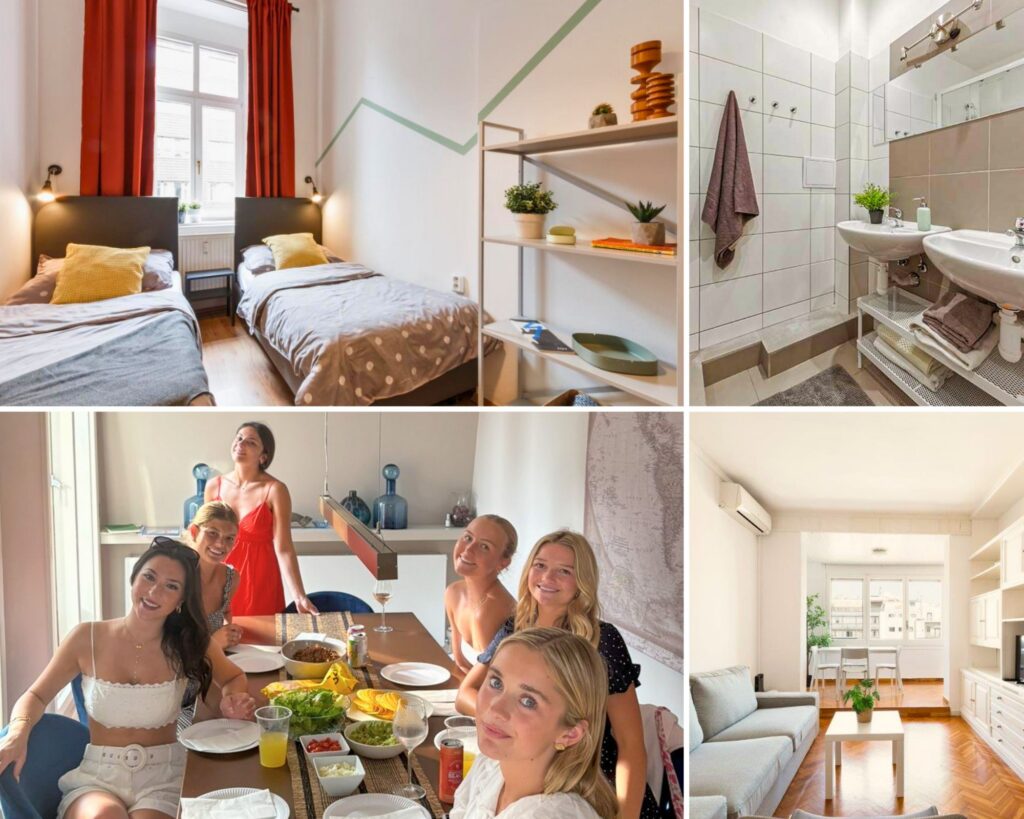
Details for study abroad apartment living
Students live alone or share apartments with other international students. Apartments vary in size. Many house four to 12 students. Unless you have a single-person apartment, expect no more than two students per bedroom with shared kitchen and social spaces. Bathrooms might be shared.
“Living in an apartment was a great place to start adulting. I truly gained a new sense of independence while living and traveling abroad”
—Kayla H., Roger Williams University | Griffith University Partnership, Gold Coast, Australia
Four benefits of apartment life
- Combines independence and social interaction. Set your own schedule. Connect with peers in your flat or elsewhere in your building. Students reported high satisfaction with IFSA apartment/flat housing options, valuing flexibility and independence in particular.*
- Personal space. Generally, you’ll have more privacy to relax or study than in a dorm or homestay.
- Location. You might live in a vibrant city center or a quieter, residential area. University-owned student apartments tend to be super convenient.
- Amenities. Some student-built complexes include social spaces, game rooms, gyms, cafes, security, and other extras.
*2024-2026 IFSA Student Evaluations
“This [Student Village] is only a 7- to 10-minute walk from campus, which is amazing. It’s so great and so convenient. There is always something to do. I love living here.”
—Zach D., Skidmore College | University of Melbourne Partnership, Australia
Considerations for study abroad apartments
Independence comes with responsibility to manage your schedule, meals, and cleaning.
Cost. Private apartments/flats may be more expensive, depending on location and amenities.
Take a look inside:
Apartment/Flat FAQ
Find the answers to questions students ask most about apartments and flats for study abroad housing.
| Questions | Answers |
|---|---|
| How does IFSA choose student apartments and flats? | IFSA does not own most of the housing facilities where we place students, but we take an active role in vetting options and follow up when concerns are raised. We carefully review all student apartments and flats, with your safety and wellbeing as the priority. Our local teams work with trusted providers, host universities, and partners to assess student apartments, reviewing location, building access, facilities, commute routes, emergency procedures, and the like. |
| Are all the building residents students? | That depends on the location. University-owned apartments and flats are typically for students only. In some locations where housing is in high demand, apartment buildings might include a mix of students, young professionals, and others. |
| How many students will I share an apartment/flat with? | This also depends on the location. Many apartments are designed for groups of four to 12 students. Others are designed for one. In shared apartments, no more than two students share each bedroom. |
| Do all apartment buildings have social spaces and amenities like gyms? | Many apartment buildings have shared common spaces for socializing and studying. Some also have game rooms, gyms, pools, and more amenities. Buildings that are part of longstanding residential areas often have historic character and more of a neighborhood feel. |
| Do I need to cook my own meals? | In most cases, students are responsible for their own meals. Each apartment has a kitchen, and generally, you’ll find markets, stores, cafes, and restaurants nearby. If you live in university-owned apartments, you might have university dining nearby. |