
Get a Full Study Abroad Experience, Even on a Budget

Studying abroad on a budget does not mean spending your semester saying no to everything that sounds fun. A sound budget helps you figure out what matters most to you, plan for expenses you know are coming, and leave room for experiences you can’t anticipate from home.
The key is to start before you leave, because your destination, program length, housing, airfare, local transportation, food, and personal travel will all shape what you spend. Before you settle on a number, take a look at our guide, Breaking Down the Numbers: How Much Does Study Abroad Really Cost?
Then you can build a budget that reflects your actual plans—not somebody else’s semester abroad.


The program you choose impacts your budget from the start
Choosing your program carefully can make a major difference from the beginning.
IFSA-Designed Programs give you a great place to start. We handcraft these programs with affordability in mind while still including IFSA support, housing, cultural activities, and curated excursions in the program experience.
You can also look at the length of your program. A January term or summer program may fit your academic plans and give you a shorter period of day-to-day expenses abroad. Just remember that some costs—especially airfare and passport expenses—do not decrease simply because you spend fewer weeks away.
Location matters, too. If cost plays a major role in your decision, compare several destinations instead of starting with one city and trying to make the numbers work. For example:
- Prague: Our IFSA Prague programs combine a European location with costs that can run lower than in many other parts of Europe. You can also choose semester and shorter-term options.
- Spain: We offer options in Barcelona and Seville, along with summer and January opportunities that give you different ways to fit Spain into your timeline and budget.
- Argentina: IFSA Buenos Aires gives you an affordable IFSA-Designed semester option in one of Latin America’s major cultural centers, with housing and IFSA excursions built into the experience.
- Mexico: Mérida offers semester, summer, and January possibilities, so you can compare different program lengths as well as costs.
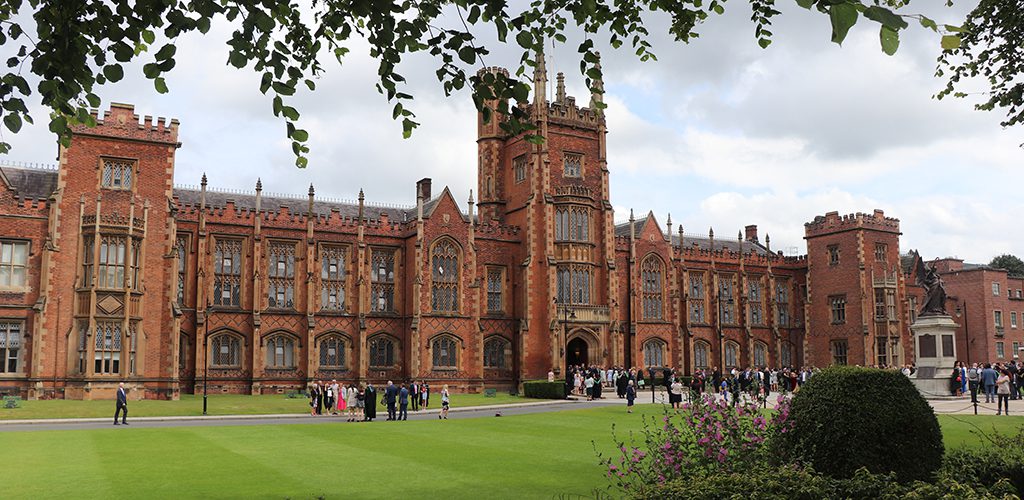
“While any program you choose will allow for a new, great experience, the most important thing to consider is the worth of the experiences you will have. What is the value of the program? What will you get for your time and money? This comes down to anything from the caliber of the university to the credits and classes, and especially to everything else that is included in a program fee.”
—IFSA Study Abroad Student, Queen’s University Belfast Partnership, Ireland
Do not choose on price alone. Compare academics, location, term, housing, features the program includes, and expenses you will cover yourself. The least expensive program on paper will not necessarily make the most sense for your degree or your goals.
Build your budget before you board the plane
Start with the big expenses you can research ahead of time. You do not need to predict every coffee or bus ride, but you should have an understanding of what your major costs might look like. Before you go, map out:
- Your program cost and IFSA-included elements
- Airfare
- Passport and visa costs
- Food and groceries
- Local transportation
- Books or academic supplies
- Personal travel
- Entertainment and everyday spending
- An emergency fund
Here are three additional considerations to keep in mind:
- Know your destination. Look up typical grocery prices, public transportation fares, casual restaurant prices, and the exchange rate between the U.S. dollar and local currency. A $20 purchase can feel very different when you constantly have to convert prices in your head.
- Review your estimated out-of-pocket expenses. Your individual IFSA program page gives you another important starting point. Under the ‘Dates and fees’ section, look beyond the base cost and review the estimated cost information for the program you are considering. That will give you a much stronger estimate than trying to create one universal study abroad budget.
- Consider how you will pay for everyday purchases. A credit or debit card that does not charge foreign transaction fees can help you avoid repeatedly adding fees to otherwise small purchases. Check ATM fees and your bank’s international policies, too.
If the overall price still feels intimidating, our guide, Is Study Abroad Too Expensive, walks through financial aid, scholarships, everyday expenses, and other factors that can change your total.
Some expenses, like visa and passport costs, are unavoidable, but researching them now will help you account for them in your budget. Our guide, What Travel Documents Do I Need to Study Abroad? The Pre-Arrival Checklist can help you get a head start.

Live like you’re there for a semester, not a weekend
Once you arrive, one of the easiest ways to overspend is to treat every day like vacation. But ou are not visiting for three days.
That means you have time to find the grocery store you like, learn which bus or train pass makes sense, discover inexpensive places near your neighborhood, and figure out where locals actually spend their time.
Try building routines that make your new city feel like home:
- Cook some of your meals at home instead of eating out every day.
- Use public transportation instead of defaulting to taxis or rideshares.
- Look for university, museum, attraction, and transportation discounts available with your university ID.
- Explore parks, markets, neighborhoods, festivals, and other low-cost local experiences.
- Ask your on-site IFSA team for recommendations.
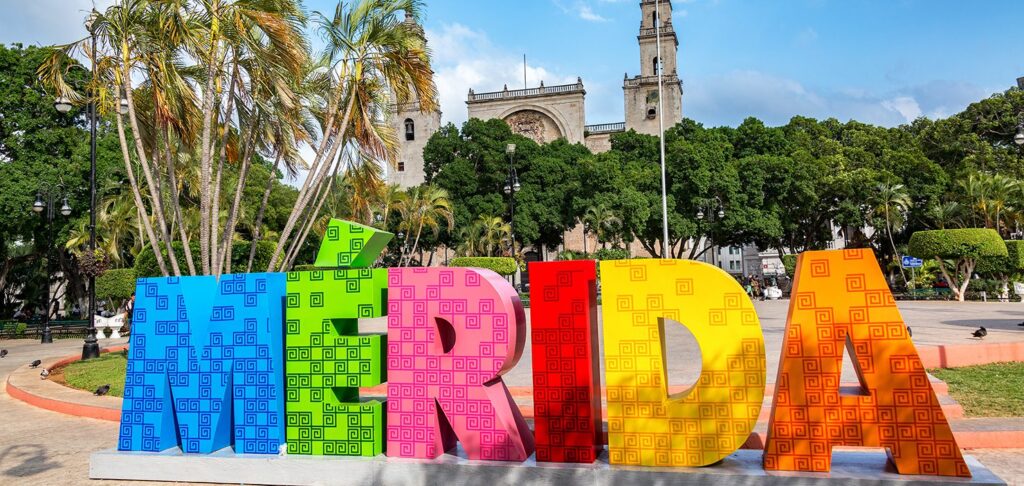
“Try to get an idea (from IFSA staff and your host parents) of how much to expect to spend on things like food and transit. This will help you get a better idea of how much you should be paying and help you avoid getting sucked into tourist traps.”
—Will T., IFSA Mérida Universities Program, Mexico
Watch small expenses before they become big budget-breakers
The occasional €4 coffee probably will not wreck your budget, but a €4 coffee every morning, a snack every afternoon, a rideshare home several nights a week, ATM fees, delivery charges, and a handful of impulse purchases tell a different story.
You do not need to track every cent obsessively. You do need to notice your patterns. Pay particular attention to expenses that repeat:
- Coffee and snacks
- Restaurants and takeout
- Rideshares
- ATM and banking fees
- Mobile data
- Tickets and cover charges
- Souvenirs
- Convenience purchases
Think in weeks instead of isolated purchases. Something that costs $10 may feel minor. If you spend that same $10 five times every week during a four-month semester, you have spent roughly $800.
That does not automatically make the purchase a bad one. It simply gives you enough information to decide whether it deserves that much of your budget.
Travel with a plan, not a race to collect passport stamps
Weekend travel can quickly become one of your largest optional expenses abroad. Flights might get most of your attention, but add airport transportation, accommodations, meals, local transit, tickets, and the purchases you make once you arrive. Suddenly, the “cheap flight” costs much more.
“It’s great to see new countries, and you should definitely do it, but don’t ignore what’s right in front of you.”
— Quintina Z., Queen Mary University of London Partnership, England
Decide on the travel that matters most to you before you start booking every open weekend. You might choose one larger trip you really care about and use other weekends for nearby cities, day trips, or exploring your host city.
“Many students use the train system as an inexpensive way to visit more places than just where their program is located.”
—Jacqueline P., Ulster University Partnership, Northern Ireland

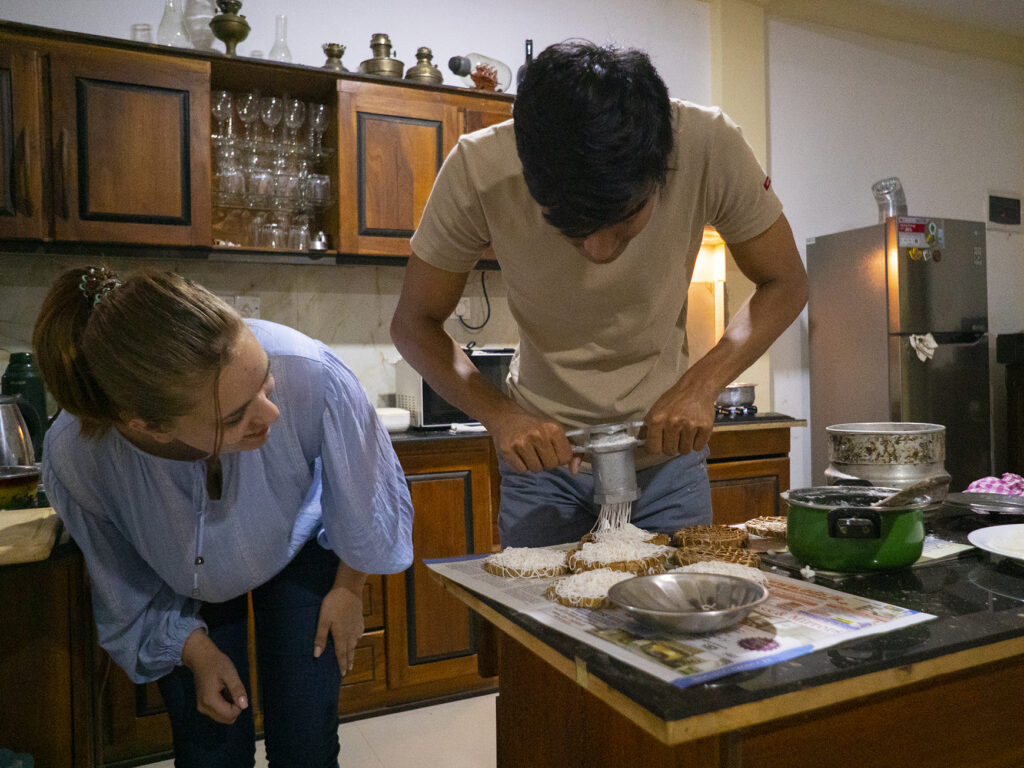
Studying abroad with IFSA does not mean you need to plan every excursion yourself. Check your program page for the activities and excursions IFSA already includes. Find yourself baking like a contestant on The Great British Baking Show in England, attending a Football match in Argentina, or traveling throughout Naples, Italy. Before planning additional trips, check your program page to see what experiences are already included.
“With our student coordinator, we traveled to Český Krumlov and Plzeň and embraced local traditions like Mikulas Night during winter. These activities enriched our understanding of Czech culture, making our semester abroad incredibly memorable.”
—Yiran Y., IFSA Tech Career Accelerator, Czech Republic
Leave room for the experience you didn’t plan
A budget should give you flexibility, not make every unexpected invitation stressful.
You might suddenly hear about a concert. A new friend might invite you on a day trip. You could discover a restaurant you really want to try or an activity you had no idea existed before you arrived.
Build a small amount of flexible spending into your budget from the beginning. Then you can say yes sometimes without borrowing from money you need for groceries or transportation.
Keep your emergency fund separate—emergency money should cover genuine unexpected needs, not the trip you suddenly want to book because the airfare looks good. It’s smart to account for an emergency buffer when you plan your overall study abroad costs.
Your goal is not to return home having spent as little as possible. Your goal is to know where your money is going so you can spend it on the parts of study abroad that matter to you.


Do a quick budget check-in every week
The budget you make at home will not perfectly predict life abroad, and that is okay.
Once you know what groceries actually cost, how often you use public transportation, and what you like doing on the weekend, adjust your plan.
A quick weekly financial review can tell you:
- How much did you spend this week?
- Did one category run higher than you expected?
- Do you have any travel or larger expenses coming up?
- Are you still on track with the money you set aside for the full term?
- Do you need to spend differently next week?
“I wrote down all my expenses on my iPhone as soon as I made any purchase to make sure I didn’t forget. If you like writing by hand, IFSA provides a planner to record your expenses. Doing this made me aware of exactly how much I was spending and kept me accountable during times I did not hit my goals. Occasionally going over your budget is okay too, as long as you are aware and keep close to your target.”
—Eryn L., IFSA University of Glasgow Partnership, Scotland
Also, keep an eye on the exchange rate. When you spend in another currency every day, it can become easy to forget what those purchases equal in U.S. dollars.
You do not need a complicated spreadsheet unless you want one. A banking app, budgeting app, or simple running total can give you enough visibility to make decisions before a small problem becomes a large one.
Start with a program—and a budget—that fits you
Now that you have tools to control your finances, start by comparing IFSA programs, program lengths, destinations, current costs, and what each option includes. Our program search lets you explore those choices side by side and open individual program pages for more detailed cost information.
Then look at the funding available to you. IFSA offers scholarships, grants, and financial aid resources to make study abroad more affordable, and remember, one in three IFSA students receives funding!
You don’t need to have every expense figured out today. Start with the costs you can determine, give yourself room for the ones you cannot predict, and build your plans with confidence from there.