It’s widely known that study abroad offers immense benefits. We’ve covered many throughout our guides, from emotional impact to academic enrichment and positive career impact. Your life will be forever shaped by the memories you make abroad.
But what about giving back and finding additional sources of meaning? Volunteering abroad can enhance your study abroad experience beyond academics and help foster deeper cultural understanding, stronger connections to the community, and personal growth.
This guide introduces you to the value of volunteering during study abroad, the benefits it offers, the types of opportunities available, and the key considerations to keep in mind before getting involved.
Why volunteer during study abroad
Volunteering during study abroad helps you engage more deeply with your host community and offers a meaningful way to give back to the place that has welcomed you and become your home. It’s a rewarding experience that broadens your awareness and helps you better understand the community you live in.
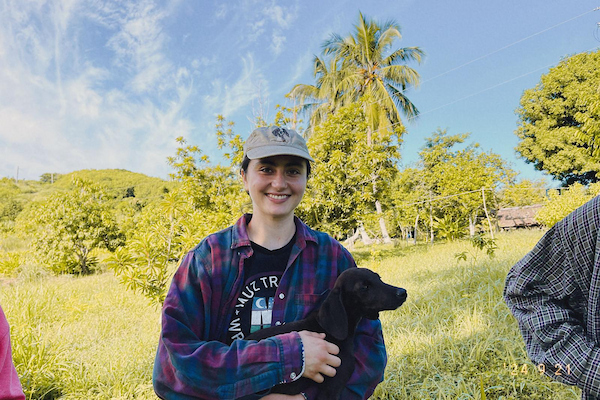
“Volunteering taught me a greater sense of empathy, and an understanding of students’ lived experiences that I had never experienced. These experiences might make us question our identities or the physical spaces we inhabit, something more profound than classroom experiences.” —Nina R., IFSA Summer in Mexico.
Volunteering presents opportunities to develop interpersonal skills that last a lifetime. You can strengthen your ability to communicate across cultures and learn to collaborate with people from different backgrounds and navigate unfamiliar situations with confidence.
Types of volunteering opportunities available abroad
Participating in volunteer opportunities while studying abroad is often easier than expected. With IFSA, you’ll have dedicated support to get involved in community-based work, whether you connect with the community engagement team before choosing your program or once you’re on site.
In some locations, this takes the form of non-credit volunteering alongside your classes. Here are a few examples:
Bond University in Australia. IFSA students can engage in non-credit volunteering through Volunteering Gold Coast. Depending on the opportunity, you may spend time caring for aged care residents or help support environmental accessibility initiatives along the region’s beaches.
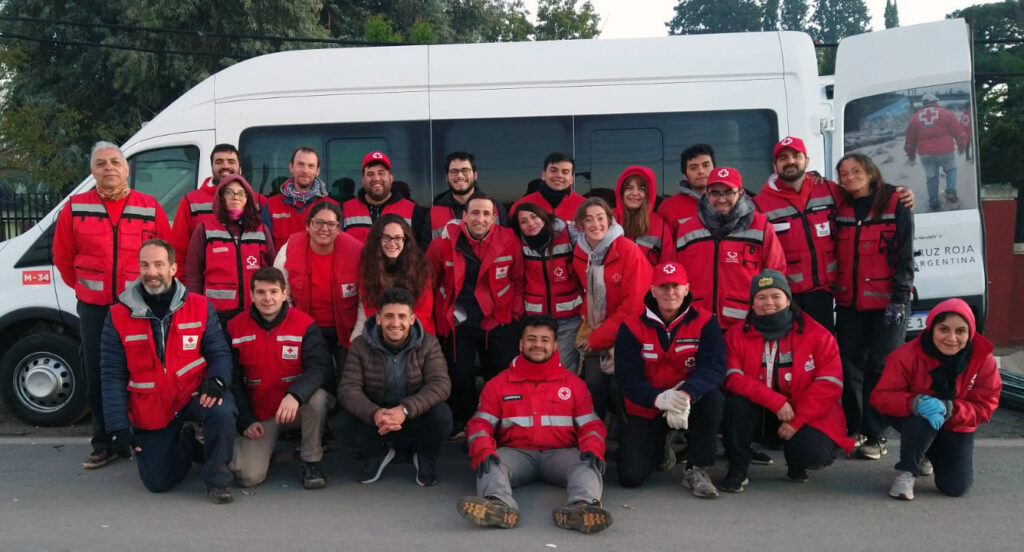
IFSA Seville Universities Program: USevilla. We coordinate non-credit volunteer activities, often in collaboration with community organizations such as Cruz Roja (Red Cross). Depending on the needs at the time you’re abroad, you might help local food banks, support refugee employment services, or tutor children.
Victoria University of Wellington. Students recently planted native trees around the city, in partnership with the City Council and Conservation Volunteers Wellington.
In other cases, community engagement is built directly into for-credit coursework. Through the University of Canterbury Partnership, IFSA students can enroll in the Engaging Communities through Social Innovation class, a for-credit community-based learning option where you’ll complete up to 20 hours of service related to social innovation and volunteerism in the Christchurch community.
Beyond IFSA-led opportunities and other program activities, your host institution may include student clubs focused on service, philanthropic initiatives, and campus-wide volunteer events that offer additional ways to get involved. If you’re studying in a country where another language is spoken, learning local terms for “volunteering” or “service work” can also help you uncover more options in your area.
Five benefits of volunteering abroad
Study abroad is already a powerful way to expand your horizons, and volunteering can deepen that experience.
Intensify your connection with local culture. Service work connects you directly with the culture and community around you, giving you insight that goes far beyond classroom learning.
Engage in causes you care about. You may arrive with a passion for local communities, environmental work, or social issues, and this gives you a chance to make an impact in the areas that matter most to you. Or, you may uncover new interests as you learn more about yourself and your host community. Volunteering provides a natural way to explore and nurture these emerging passions.
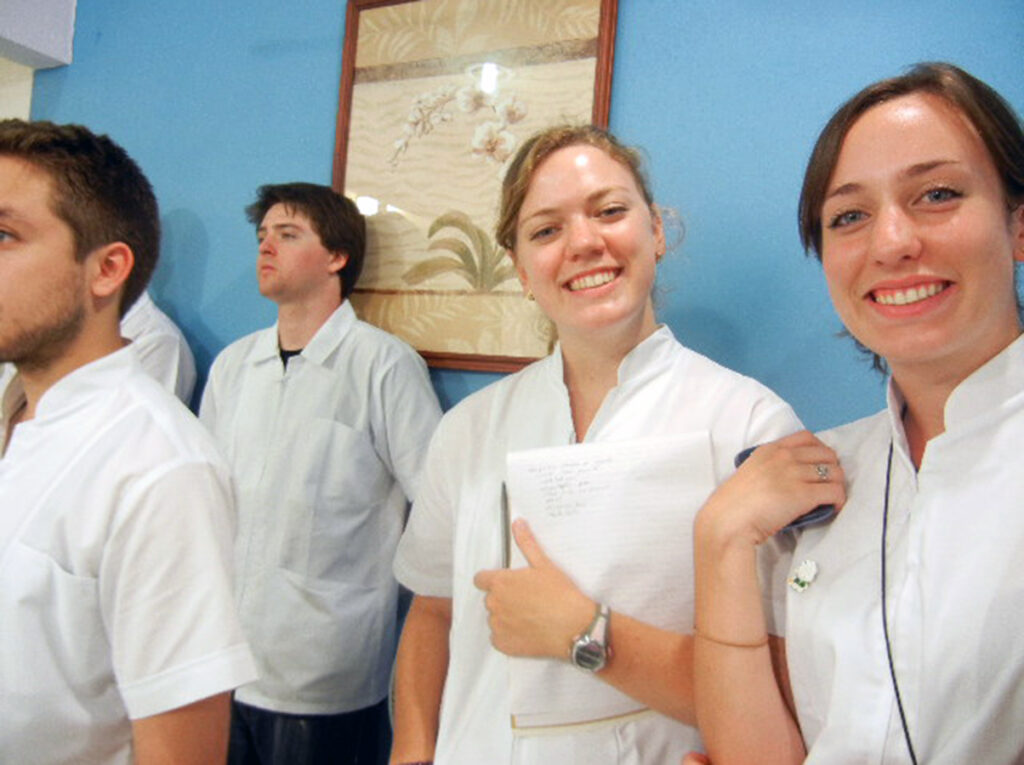
“Volunteering has never been a one-sided transaction for me. I always seem to walk away with more than I anticipated. Being a volunteer with this class of Argentine students was no different. They led me to learn more about myself, question my culture, and think hard about the things that make me, me. For this, I am forever grateful. Not only was I able to make a small impact on a few people, but I was able to open up and value my own sense of self.” —Loren J., Buenos Aires, Argentina.
3. Apply classroom learning in real-world settings. Take your academics to the real world. Opportunities built into your program are designed to complement your academic work, allowing you to apply what you’re learning in real-world settings. This creates a more integrated, full-circle experience that helps you understand your coursework in context.
4. Strengthen your resume. Beyond personal growth, volunteer work also strengthens your resume and builds career-ready skills—including active listening, leadership, and emotional intelligence. These are attributes that stay with you long after your time abroad ends.
What to consider before you volunteer abroad
First, respecting local customs, traditions, and perspectives is essential. Volunteering is a chance to engage thoughtfully with your host community, not to impose outside assumptions or unintentionally disregard cultural norms. Take time early on to observe, ask questions, and learn from local perspectives so your involvement is supportive and informed.
It’s also important to consider your personal safety and the ethical impact of your involvement. Even with good intentions, always research opportunities carefully and choose programs and opportunities that are reputable, sustainable, and aligned with the needs of the community. With IFSA, you’ll get help finding vetted options, which will save you time in the long run.
Finally, remember to manage your time effectively and make sure you can complete coursework with additional responsibilities. By planning carefully and approaching volunteering with respect and awareness, you can create an experience that is both impactful and enriching.
Start your journey, get involved
If you’re exploring a study abroad experience, you’re already considering ways to expand your worldview. Volunteering is a natural way to deepen your journey and make a positive, lasting impact on the community that welcomes you.
To explore programs that include these types of experiential and community-focused opportunities, visit IFSA’s Experiential Learning page.