
How to Adjust to a New Culture While Studying Abroad: Tips for U.S. Students

Studying abroad asks you to learn more than the route to class or the layout of a new campus. You are also entering an academic and cultural environment that’s likely different from the one you know, which can affect everything from classroom expectations and communication to language, community, and how different parts of your identity are understood.
You don’t need to arrive with all the facts. Instead, be ready to be curious, observe, ask questions, build connections, and give yourself time to adjust. The goal is to begin prepared to keep learning once you are there.
Culture shock can be part of that process. Still, this guide focuses on the practical side of cultural adjustment: how to learn from your surroundings and become more comfortable participating in it. If you are looking specifically for information about culture shock, its stages, coping strategies, or reverse culture shock, our article How to Deal With Culture Shock and Reverse Culture Shock When Studying Abroad covers those topics in detail.


Learn about your destination before you arrive
You cannot predict every experience you will have abroad, but you can give yourself useful context before you leave.
Learn about the culture of your destination and consider how local context may differ from what you know at home. That preparation can include exploring the cultural landscape of your host country and thinking about how identity, language, communication, community, and local perspectives may shape your experience.
For U.S. students, this is also an opportunity to recognize that ideas, expectations, and perceptions that feel familiar at home may not carry the same meaning somewhere else. Consider how Americans may be perceived in different locations, remain aware of stereotypes, and approach cultural differences with an open mind.
That preparation should give you context, not a script. Reading about a destination cannot tell you exactly how every person will think or behave, and no country can be reduced to a short list of customs. Instead, use what you learn before departure as a foundation that you can continue building on once you are actually there.
To learn more, IFSA’s Identity Resources offer destination-specific information about cultural context and identity, while How to Prepare for Study Abroad covers the broader academic, logistical, and personal preparation involved before departure.


Notice without judgement
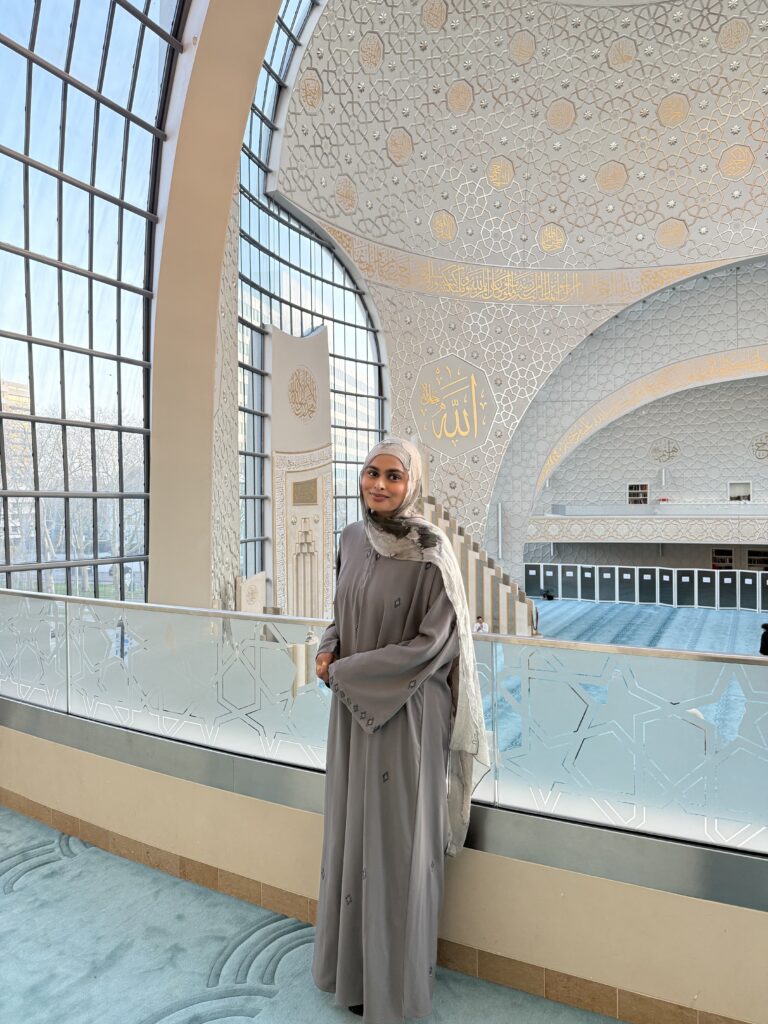
Another useful strategy is to approach unfamiliar experiences with curiosity rather than immediate judgment. That means listening, observing, and asking questions when a behavior, action, or system works differently from what you expected.
This can be especially useful because cultural differences are not always obvious enough to announce themselves. You may simply notice that the expectations around you do not match what you anticipated. Instead of immediately measuring the difference against what you are accustomed to in the United States, give yourself time to understand the context around it.
Instead of “Why don’t they do this the way I’m used to?” ask, “How does this work here?”
That shift does not require you to agree with every idea or prefer every cultural norm you encounter. Think critically about different values and perspectives and stay open-minded when those perspectives differ from your own. Giving yourself time to observe can help you distinguish between something that is simply unfamiliar and something you genuinely want to question.

Treat academic experience as part of cultural adjustment
Studying abroad does not necessarily mean taking the same kind of classes you take at home in a different location. Depending on your program and host institution, the academic structure may be different.
You might encounter different combinations of lectures, seminar discussions, presentations, projects, independent research, and self-directed study. Grading systems and the number or structure of graded assignments may also differ from what you experience at a U.S. college or university.
That means academic adjustment starts with understanding the system you are entering, rather than assuming that familiar expectations will apply.
- Read course information carefully.
- Learn what professors expect.
- Make use of available academic resources/
- Ask questions when instructions or expectations are unclear.
- Develop strong study habits early.
- Use professors’ office hours and campus resources when you need clarification.
Your experience can also depend on the type of program you choose. IFSA-designed programs are structured for international students, while students participating in direct-enroll programs join the academic environment of a partner university. Those experiences can create different expectations and different levels of academic adjustment.
“As a history and art history double major, one of the highlights of my time in Edinburgh was immersing myself in the city’s deeply rooted arts scene. Engaging with a new cultural landscape sharpened my perspective and deepened my commitment to pursuing a career in museum work and public history.”
—Olivia P., University of Edinburgh, Scotland
For more detail about teaching styles, grading, coursework, and academic resources, see Tips for Academic Success Abroad.
Let communication be something you learn, too
Language is only one part of communication. Cultural context can also affect how words, interactions, and expectations are understood, which is why it’s important to pay attention to how communication works within your host culture.
You do not need to arrive with a universal list of cultural rules, and be cautious about assuming that everyone within a country communicates in the same way. Instead:
- Listen to how people around you communicate.
- Observe the environment you are in.
- Ask questions when you are unsure.
Language requirements also vary considerably by program. Some IFSA programs taught in English do not require previous experience with the local language, while certain direct-enrollment or immersion programs require a particular level of proficiency or language coursework.
Even when fluency is not required, it’s a good idea to learn useful words and phrases for everyday communication, including greetings, thanks, apologies, asking for help, and asking for directions. The purpose is not to speak perfectly, but to give yourself more ways to participate.
“Once you start chatting, people are incredibly welcoming and kind—they want you to succeed.”
-—Annika S., Seville Universities, USevilla, Spain
If language is an important consideration in your program search, see Do You Need to Speak the Language to Study Abroad? Here’s What You Should Know, which explains how requirements differ across IFSA programs.

Create enough familiarity to make room for exploration
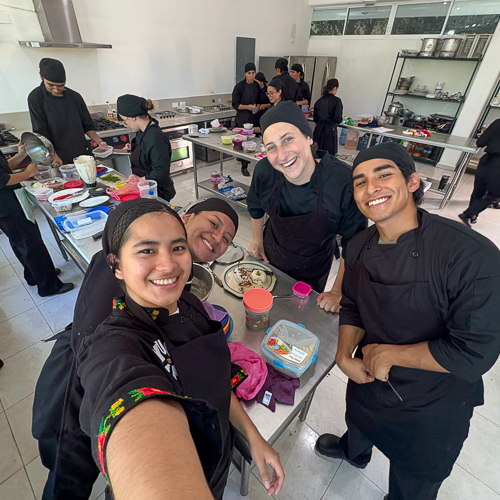
Study abroad may bring new experiences, but adjusting does not require every part of every day to be new.
Be intentional about establishing a routine during the first weeks abroad. Consistency can give you a foundation while the rest of your environment becomes familiar.
“Right after my first session at this court, I had met a group of friends from the nearby university that plays multiple times a week. We exchanged numbers, and they added me to a huge WhatsApp group that organizes pickup basketball. All this on day two of my three-month trip completely calmed any nerves I had about getting homesick. Since then, I meet at least once a week to play basketball.”
—Owen M., IFSA Study in Barcelona, Spain
Instead of leaning on those routines to avoid newness, routines can become part of how you begin to participate. A familiar café, park, study space, or walking route can become part of daily life, for example.
As you become more comfortable navigating your environment, continue expanding what you do and where you go, without treating the entire experience as a series of one-time activities.
That balance matters because study abroad is not only an opportunity to see a destination. It’s also about learning how to live there.
For more guidance on establishing routines and preparing for the transition, see How to Prepare Emotionally for Study Abroad.
Move from observing to participating
You can learn a great deal by paying attention to the culture around you, but participation creates another important key to understanding the community you have joined.
To move in this direction, meet local people, connect with other international students, and explore clubs, societies, student groups, and recurring activities available through your host university or IFSA program. You do not need to sign up for everything available. A recurring activity connected with an interest may be more useful than trying to fill every open hour with something new. The point is to create opportunities to participate consistently in the community around you rather than looking in.
“I set a goal. When people asked me to tag along or try a new activity, I would aim to say yes. After saying yes, I gained an abundance of new hobbies and activities that I would never have tried. This ranges from snorkeling among islands and hiking (13 miles across a volcano) to learning salsa dancing and origami.”
—Callehan L., University of Auckland, New Zealand
Check out IFSA Student Stories to read about how other students got involved in university societies, sports clubs, and other campus organizations. Your experience does not need to look exactly like anyone else’s, and asking what kind of involvement would help connect is a helpful first step.
Consider how your identity may be interpreted abroad
You bring your identity with you when you study abroad, but certain parts of how you define yourself may be understood, perceived, or experienced differently depending on where you go.
Start by considering the racial, ethnic, religious, socioeconomic, political, linguistic, and other cultural dynamics of your destination before departure. And think about aspects of your identity that may be more noticeable abroad, where you might find community, and how local attitudes or stereotypes could differ from those you encounter at home.
Nationality is one part of that picture, but race, ethnicity, religion, gender, sexuality, disability, socioeconomic background, and other aspects may all affect your experience abroad.
It’s important to look beyond broad generalizations, so before departure, refer to IFSA’s Identity Resources. This will help you understand more about your specific location and consider which questions may be most relevant to your experiences.


Ask for help
Cultural adjustment does not require you to independently decode every unfamiliar situation.
Questions are part of the process. Depending on what you are trying to understand, you may be able to talk with classmates, professors, university resources, or IFSA staff members who know the local environment.
IFSA employs resident directors and support staff in the countries where programs are offered, and those teams provide local knowledge and help students navigate questions, concerns, and available resources. Students also receive destination-specific information during on-site orientation, while resident staff is available for non-emergency questions during office hours, and IFSA provides 24/7 assistance for emergencies.
Using that support does not mean you have failed to adjust. In many cases, getting the right context is exactly what allows you to understand a situation more accurately and thrive.
For information about the support available before and during an IFSA program, visit Health, Safety, and Wellbeing.
Give yourself time to keep learning
Cultural adjustment does not follow one timeline. It takes time, and that amount of time differs from one person to another. Just like learning the practical side of living abroad, understanding a new academic environment, communication style, community, or cultural context also happens gradually.
Instead of measuring your experience against an idea of how quickly you should feel adjusted, – pay attention to what you are learning and where you have persistent questions. Continue using the routines, relationships, resources, and observations that help you understand your environment more clearly.
If adjustment becomes emotionally difficult, IFSA’s resources on culture shock, emotional preparation, and mental health while studying abroad can provide more targeted guidance.

Start your journey
There is no point during study abroad when you need to declare that you completely understand your host culture. Cultural adjustment is better approached as something you continue learning through academic, social, and everyday experiences.
- Prepare before you leave, but remain open to revising what you thought you knew.
- Pay attention to the academic environment rather than assuming it will operate like your home school.
- Listen carefully to how people communicate, and use the language skills available to you.
- Build routines that help you participate, and look for meaningful ways to get involved in your community.
Most importantly, keep asking questions when you encounter something you do not understand. As a student abroad, learning happens 24/7, beyond the confines of the classroom, and that’s what makes this experience so memorable and valuable.